



New York Court Clarifies Limits on Religious Arbitration and Civil Court Authority
A recent decision from the New York Supreme Court, Westchester County, addresses the limits of First Amendment protections in the context of religious arbitration and ongoing civil litigation. The ruling in Bain v. Strulovitch highlights when courts may intervene in proceedings before a beth din where the underlying dispute is secular in nature and the parties are already litigating in civil court.
The Confrontation
In December 2024, the Supreme Court in Bain v. Strulovitch issued a preliminary injunction barring enforcement of a challenged rabbinical arbitral award. Despite that order, Strulovitch commenced a separate arbitration before a Brooklyn beth din in an effort to enforce the same award. When Bain moved to enjoin that proceeding as violating the court’s injunction, Strulovitch raised a First Amendment defense, arguing that a civil court lacks the power to restrain a party from pursuing religious arbitration. Justice Jamieson rejected that defense.
Strulovitch's Argument
Strulovitch contended that enjoining a beis din proceeding would violate his Free Exercise rights. He invoked the foundational principle that civil courts exercise no jurisdiction over "theological controversy, church discipline, [or] ecclesiastical government," and argued that a beth din proceeding is inherently religious — its purpose being to decide matters of Jewish religious law. Because the effects of a summons to participate in a beth din proceeding is religious rather than legal, he argued, judicial interference is precisely what the First Amendment proscribes. The Court acknowledged the general principle but rejected its application.
The Neutral Principles Framework
The court relied on two recent Second Department decisions. In New Hope Christian Church, Inc. v. Parks, the court reaffirmed that the First Amendment forbids civil courts from interfering in religious disputes due to the danger of state entanglement in religious controversy. But in Chestnut v. United Methodist Church, the Second Department held that disputes involving religious parties may still be adjudicated by civil courts, so long as the court applies neutral principles of secular law — "objective, well-established principles of secular law" — without reference to religious doctrine. Constitutional protection follows the nature of the question being decided, not the identity of the parties or the forum.
The Pivotal Finding: The Beth Din Summons Named the Civil Case as the Subject Matter of the Beth Din Proceeding
Rather than engaging in an abstract inquiry into beth din proceedings generally, Justice Jamieson focused on the specific content of the summons itself. The rabbinical summons did not invoke a matter of Jewish law; instead it identified the dispute as regarding the same case pending before the Westchester Supreme Court, referencing that action directly. The court further noted that Strulovitch's own rabbinical representative confirmed the secular purpose of the proceeding: to confirm the arbitral award and to establish that Bain has no right of first refusal — quintessentially secular legal questions resolvable entirely by neutral principles of law. As the court stated: "The matters that Strulovitch has raised with the Beis Din . . . are not religious, as clearly stated in the summons." Strulovitch could not cloak a secular commercial dispute in constitutional protection simply by bringing it before a religious tribunal.
Significance
This decision establishes that a beth din proceeding is not inherently religious nature, thereby preventing a civil court from enjoining a beth din proceeding where the parties are already litigating in civil court. Ultimately, constitutional protection attaches to the subject matter of a dispute, not the forum in which a party chooses to litigate it.
Morrison Cohen serves as counsel to one of the parties in Bain v. Strulovitch (Supreme Court, Westchester County, Index No. 75548/2024). The team is led by Y. David Scharf, Aaron Lauchheimer and Alexander Yarm.
Contacts
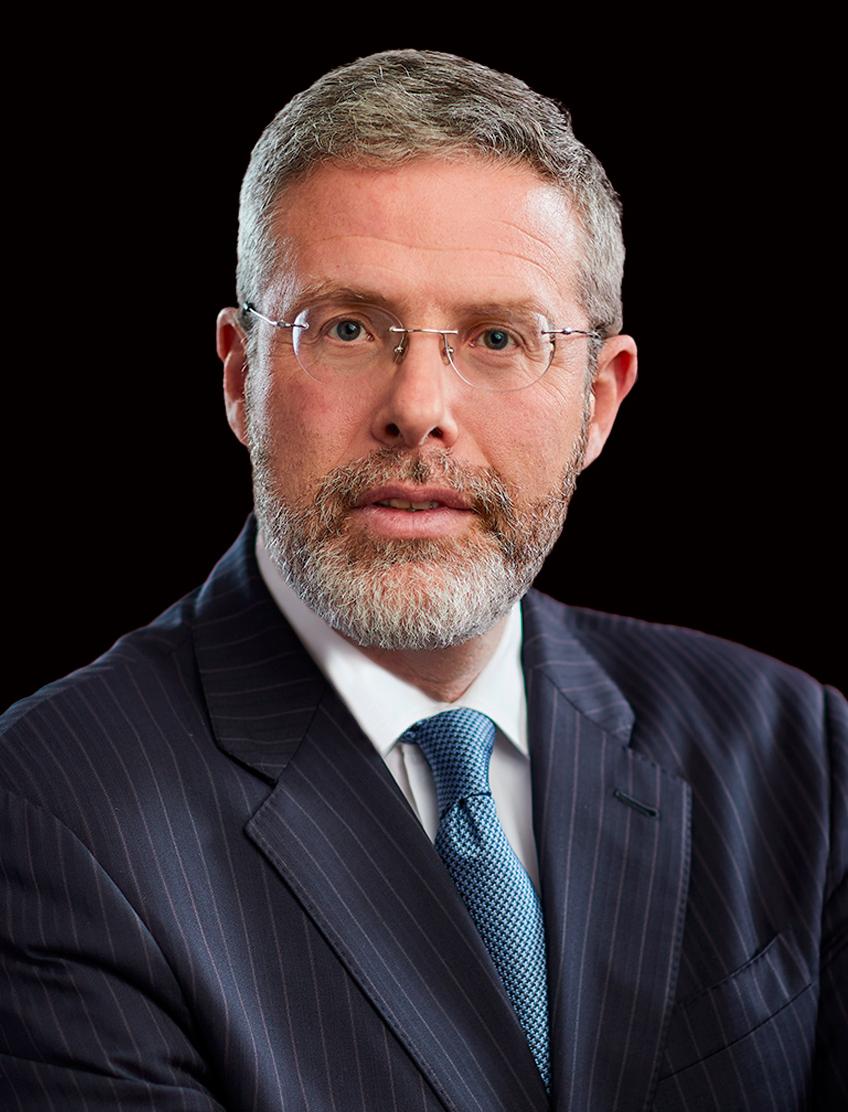
- Y. David Scharf Partner & Chair of the Executive Committee; Chair, Government Strategies & Controversies
- ydscharf@morrisoncohen.com

Related Practices
Our dynamic bench of business litigators defends corporations and individuals in complex, high-stakes matters in courts throughout the country.